

You have learned ghusl and wudu. Both normally use water.
But what happens if you genuinely cannot use water?
Islam gives another form of ritual purification called tayammum.
The beginner idea: tayammum is not a “lesser” form of worship or a shortcut around wudu. It is a purification Allah has permitted for situations in which water cannot properly be used.
What is tayammum?
Tayammum is a form of ritual purification using clean earth or an earth-based surface instead of water when the Islamic conditions for doing so are met.
It can take the place of wudu, and in appropriate circumstances ghusl, until water can properly be used again.
فَلَمْ تَجِدُوا۟ مَآءًۭ فَتَيَمَّمُوا۟ صَعِيدًۭا طَيِّبًۭا فَٱمْسَحُوا۟ بِوُجُوهِكُمْ وَأَيْدِيكُم مِّنْهُ
Falam tajidū mā'an fatayammamū ṣaʿīdan ṭayyiban famsaḥū biwujūhikum wa aydīkum minhu.
If you cannot find water, then seek clean earth and wipe your faces and hands with it.
When might tayammum be used?
The two beginner situations to understand are:
- Water is genuinely unavailable after making a reasonable effort to obtain it.
- Using water would cause harm or worsen a health problem in circumstances where Islamic law permits tayammum.
There are other detailed situations discussed by scholars, but you do not need to memorize every case before learning the basic method.
Tayammum is not simply for inconvenience. Having to walk to another sink, feeling cold water is unpleasant, or being in a hurry does not by itself mean water cannot be used.
What if water could harm me?
If you have an injury, illness, wound, dressing, cast or medical condition, purification can become more detailed than a beginner webpage can safely decide for you.
Do not remove medically necessary dressings or use water in a way that may harm you simply because you are afraid your prayer will not count.
Ask a qualified scholar how wudu, wiping, washing unaffected areas and tayammum apply to your particular situation. Follow appropriate medical advice about what is safe for your body.
What can I use for tayammum?
The Qur'an refers to clean earth. Scholars have differed over exactly which natural earth materials and surfaces qualify.
Soil, sand, stone and similar earth-based materials are among the examples discussed in Islamic law.
For a beginner: if you know in advance that you may need tayammum regularly because of illness, travel or another ongoing situation, ask a qualified teacher what suitable material you should keep available according to the guidance you follow.
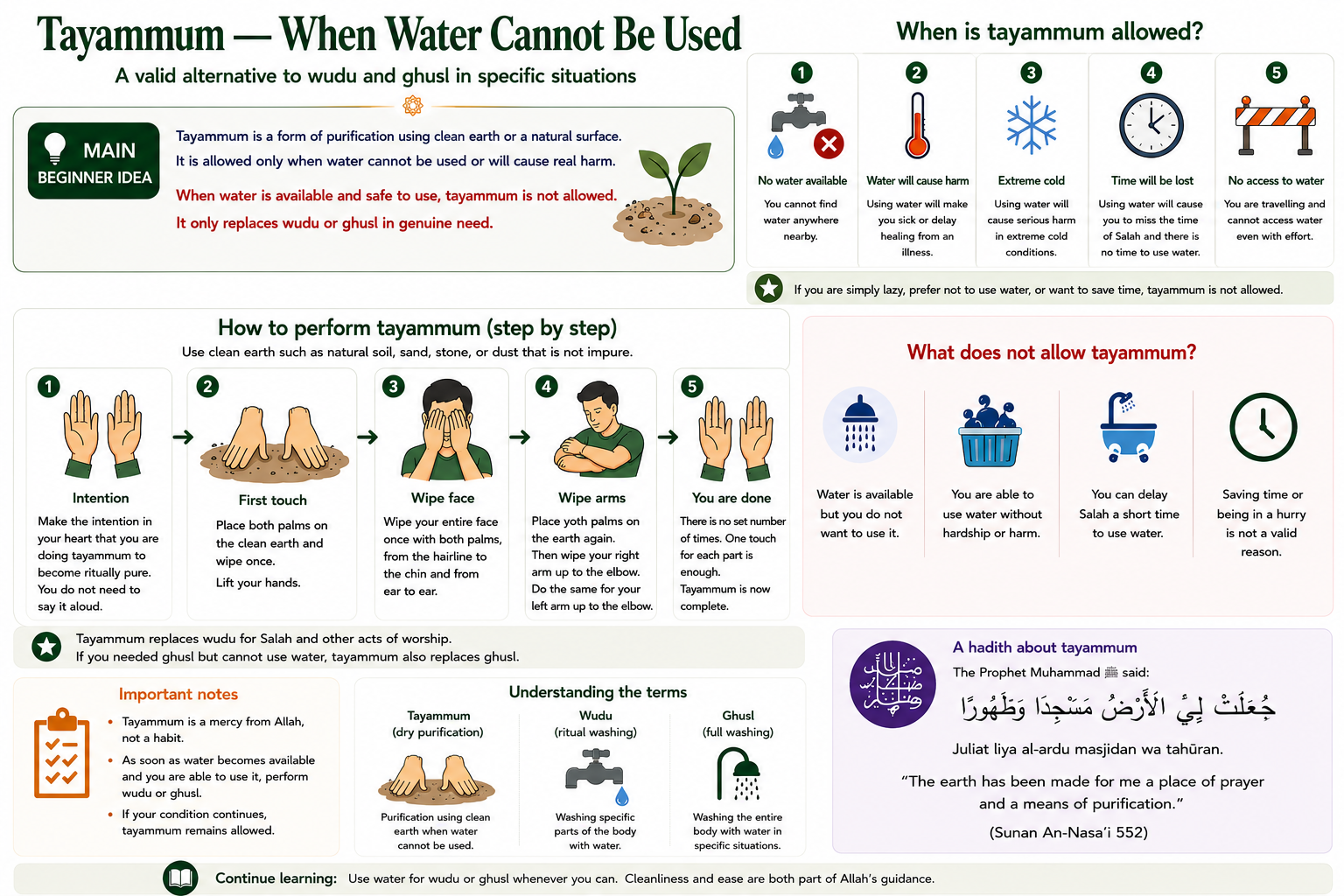
How to make tayammum
The basic action is very short.
Know in your heart that you are making tayammum for ritual purification. You do not need to announce your intention aloud.
Place or lightly strike your hands on a clean earth-based surface suitable for tayammum.
Wipe your face with your hands.
Wipe the hands. The precise extent and some details of this wiping differ between schools of Islamic law, so the final instructional visual for this lesson must be scholar-reviewed.
The Prophet ﷺ taught Ammar ibn Yasir رضي الله عنه a simple tayammum by striking the earth with his hands and wiping his face and hands.
Sahih al-Bukhari 338; Sahih Muslim 368
The sequence at a glance
Do my hands need to be covered in dust?
No. The purpose is not to coat your face and hands in dirt.
The Sunnah report about Ammar رضي الله عنه describes the Prophet ﷺ blowing excess material from his hands before wiping.
Tayammum is a ritual act of purification, not an attempt to physically wash yourself with soil.
Does tayammum last forever?
No. Tayammum is connected to the reason water could not properly be used.
When the reason ends — for example, suitable water becomes available and can safely be used — you return to the normal purification required for future worship.
There are detailed differences among scholars about exactly when tayammum ends and whether a new tayammum is needed for each obligatory prayer in particular circumstances.
◇ Scholars differ
Which surfaces qualify: scholars differ over how broadly the Qur'anic term for clean earth is applied to soil, sand, stone and other earth-derived surfaces.
How far the hands or arms are wiped: schools differ on some details of the required area.
One tayammum for multiple prayers: schools differ in some circumstances over how long tayammum remains usable.
Medical situations: the ruling can depend on whether some areas can safely be washed, whether a dressing can be wiped, and whether water use would genuinely cause harm.
What breaks tayammum?
Things that invalidate wudu also affect purification made through tayammum.
In addition, when the valid reason for tayammum is gone and water can properly be used, the normal water purification becomes relevant again.
You are not expected to diagnose every edge case yourself. If your need for tayammum comes from an ongoing illness, disability, wound or medical treatment, it is worth getting specific guidance once so you know exactly what to do each day.
What if I prayed with tayammum and later found water?
Do not automatically assume your prayer was invalid.
If tayammum was valid when you prayed, later circumstances do not simply erase the worship you performed according to the concession Allah gave you.
There are details that can depend on the circumstances, so if you discover that water was actually available or believe you misunderstood whether tayammum was permitted, ask a qualified scholar rather than repeatedly redoing prayers out of fear.
Why does Islam have tayammum?
Purification matters, but Islam does not teach that worship is only for people whose circumstances are easy.
Allah gave rulings for ordinary days and rulings for difficulty.
The same Qur'anic passage that teaches purification also says:
مَا يُرِيدُ ٱللَّهُ لِيَجْعَلَ عَلَيْكُم مِّنْ حَرَجٍۢ وَلَـٰكِن يُرِيدُ لِيُطَهِّرَكُمْ
Mā yurīdu Allāhu liyajʿala ʿalaykum min ḥarajin walākin yurīdu liyuṭahhirakum.
Allah does not intend to place hardship upon you, but He intends to purify you.
This is an important pattern you will see throughout Islam: Allah gives commands, and He also gives lawful concessions when people face genuine difficulty.
You have finished the Purity section
You now know the three purification ideas a new Muslim needs before learning Salah:
Ghusl — full ritual washing when major purification is required.
Wudu — the regular ritual purification you will use frequently for Salah.
Tayammum — the purification Allah permits when water cannot properly be used.
You do not need to know every detailed ruling before moving forward.
You now have enough orientation to begin the next major part of your journey: Salah.
And remember: Islam is now your whole life, but you do not need to learn your whole religion today.